1. Instructional challenge
Young beginning English learners may recognize nouns and verbs during teacher explanations but struggle to identify people, places, things, and actions within a new story scene. The Word Bridge addresses this recognition-and-transfer gap after direct instruction; it is not a complete grammar curriculum.
2. Learners and constraints
The Word Bridge specifies a small Grade 2–3 beginning-ESL group, visual supports, brief activities, and response modes that do not demand extended English production. Shared devices, limited vocabulary, and variable language proficiency are considered in the design.
3. My design decisions
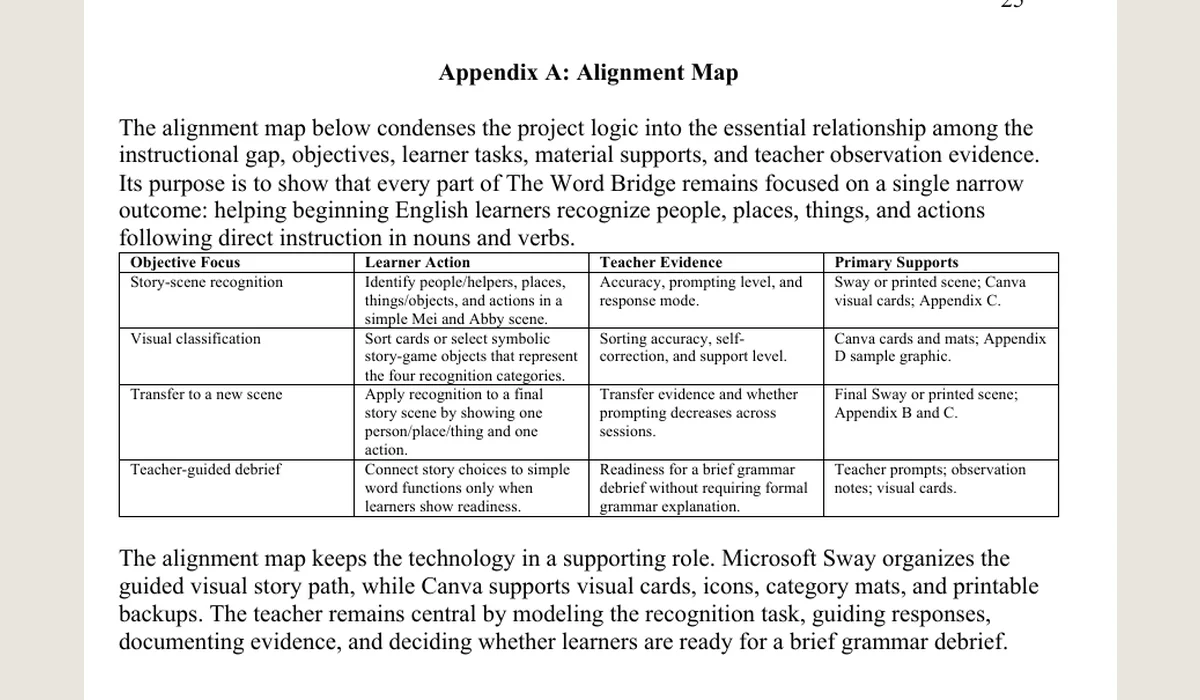
The design links identifying and sorting visual story elements to teacher observation evidence rather than relying exclusively on written grammar explanations.
Pointing, gestures, sorting, short oral responses, and printed supports give beginning learners accessible ways to demonstrate recognition.
Star Bridge: Ancient Ruins is a separate formative assessment prototype with scaffolded choices, a narrative context, and opportunities for teacher observation.

4. Evidence and limits
The linked documents and prototype allow a reviewer to inspect the intended alignment, scaffolding, and response options. They do not independently establish improved learner achievement, a completed accessibility conformance audit, or causal learning gains.
Next design decision
Pilot the response options with beginning learners, document accuracy and prompting needs, and use the resulting observations to revise instructions and supports before making claims about learning effectiveness.