1. Problem and decision context
Assessment structures can exist without presenting a clear public account of what student evidence means or what improvements follow. I examined how Tiffin Core assessment results are communicated and how those findings could guide decisions.
2. Intended audience and constraints
The intended professional audience includes faculty, academic administrators, and other stakeholders who need understandable assessment findings. The report explicitly recognizes that detailed current General Education results are not fully visible in the public materials used for this academic review.
3. My design decisions
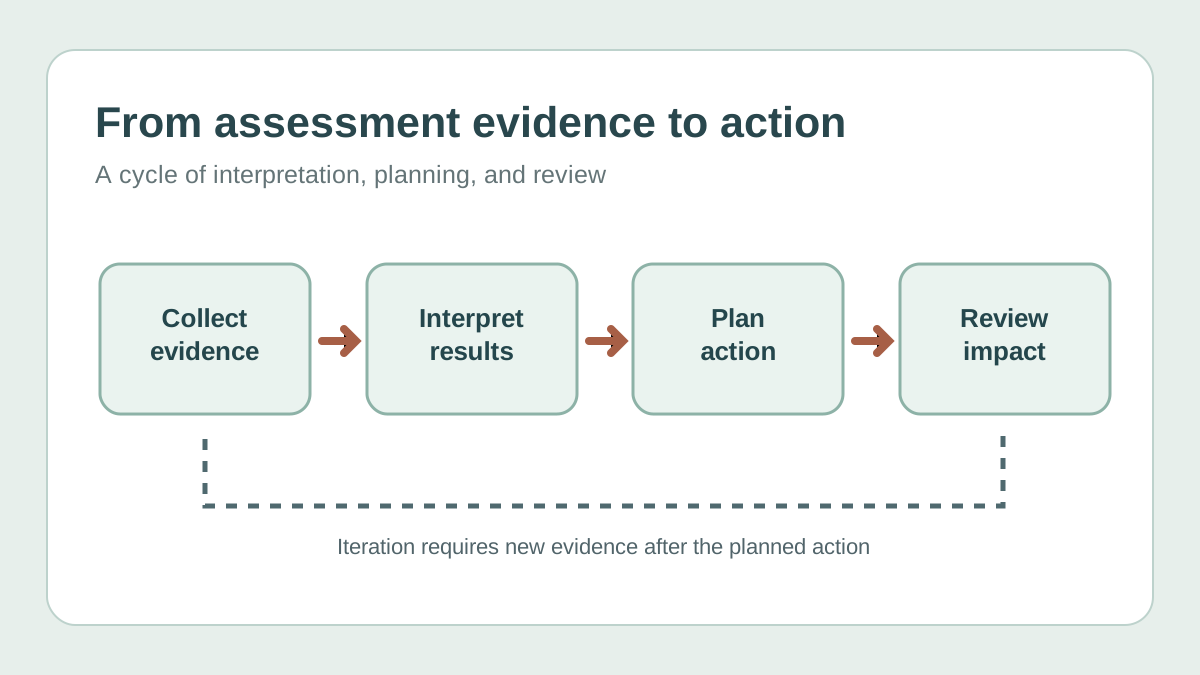
The written recommendations emphasize transparent reporting, action planning, follow-up, and closing the loop rather than data collection alone.
The report distinguishes evidence of an assessment process from evidence that its interventions improved student outcomes.
The companion interactive lesson provides an additional way to explore the recommendations and associated instructional reasoning.
4. Evaluation and limitations
The case study presents proposed improvements and a learning sample based on the analysis. Implementation and outcomes would require further evidence. The analysis is based on the public documentation and academic sources available to the project.
Next design decision
Gather stakeholder feedback on the clarity and actionability of the recommendations, pilot the communication workflow, and report subsequent actions before making claims about institutional improvement.