Spring
Rama is no longer a silent, frozen world. The Cylindrical Sea begins to break apart, and Norton must decide whether the exploration should continue or retreat.
Cause and EffectRisk JudgmentPronunciationSystems Thinking
What must your analysis team accomplish?
Reconstruct
Place the major events of Chapter 17 in logical order.
Explain
Connect heat, melting ice, unsupported ice, water movement, and sound.
Classify
Separate observation, inference, prediction, and decision.
Read Aloud
Practice difficult sound groups from the chapter.
Evaluate
Judge whether Norton waited too long or acted at the right moment.
Transfer
Apply the same risk model to a real-world safety decision.
What happens in Chapter 17?
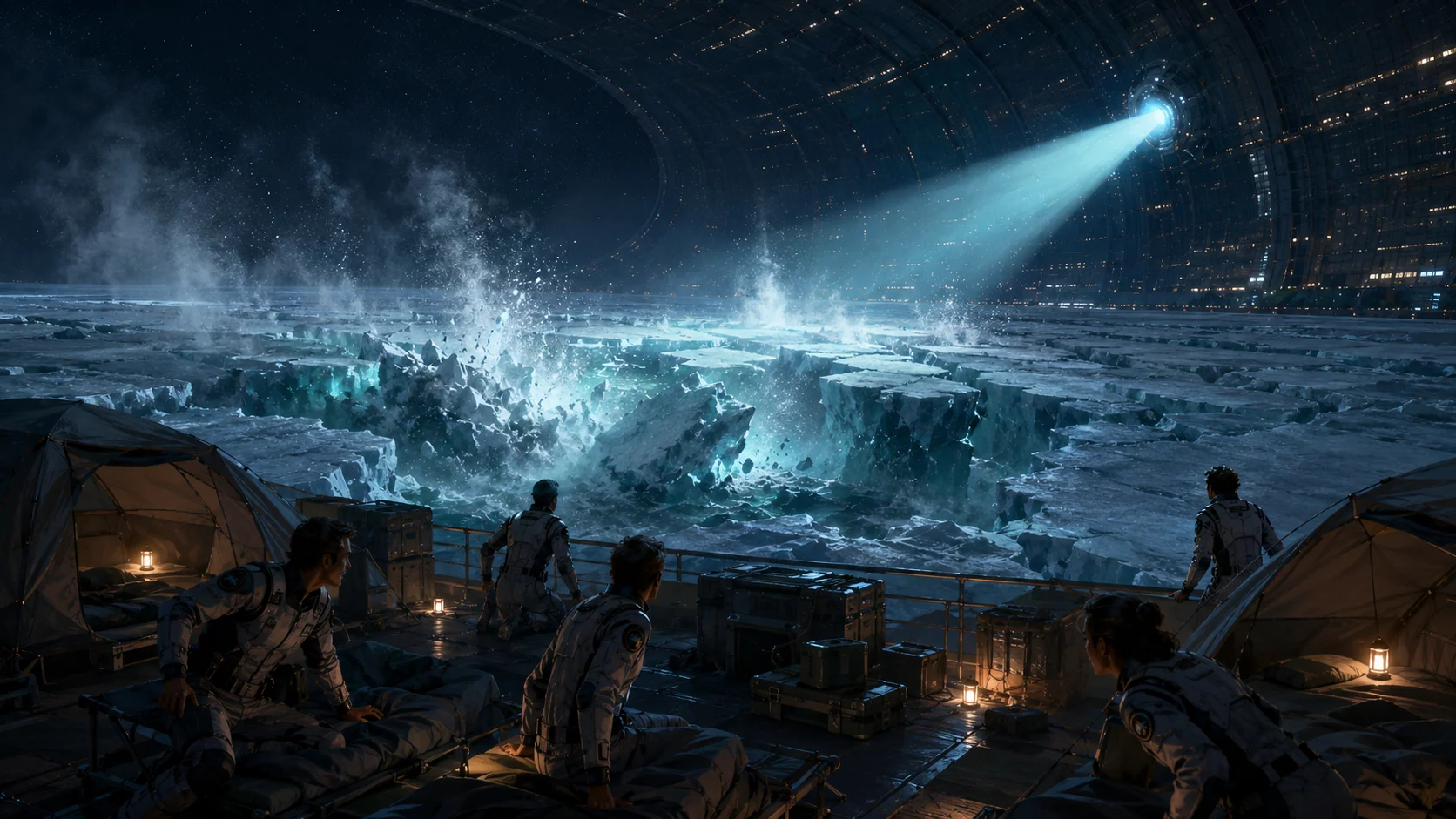
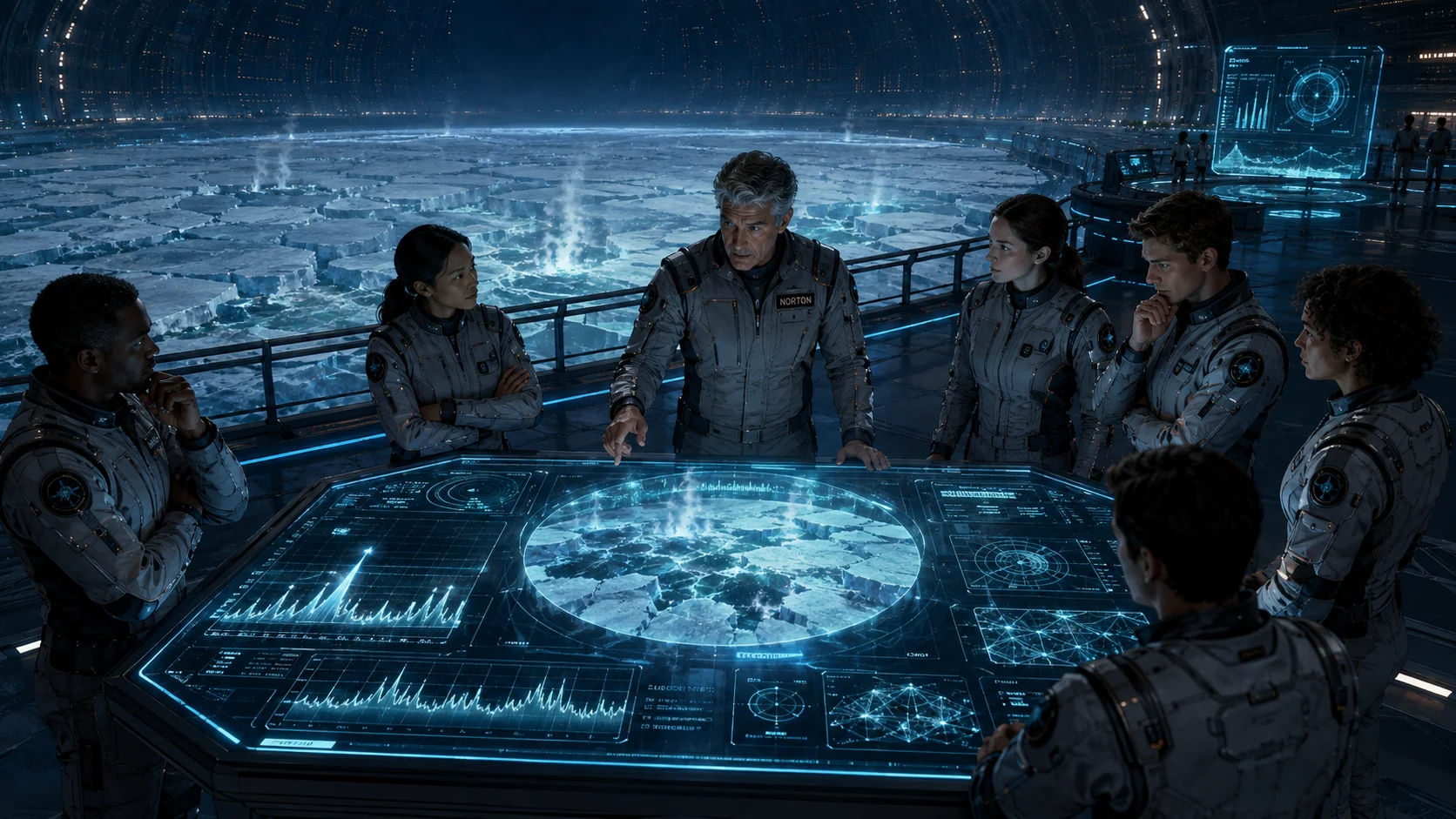
During Rama's artificial night, Norton listens for the rising wind that the scientists had warned about. Instead, the crew is awakened by an enormous cracking and crashing sound near the Cylindrical Sea.
The Hub searchlight shows the ice breaking apart. Norton realizes that the sea has been thawing from underneath. As ice turns into water, it takes up less space, leaving the surface ice unsupported until it collapses.
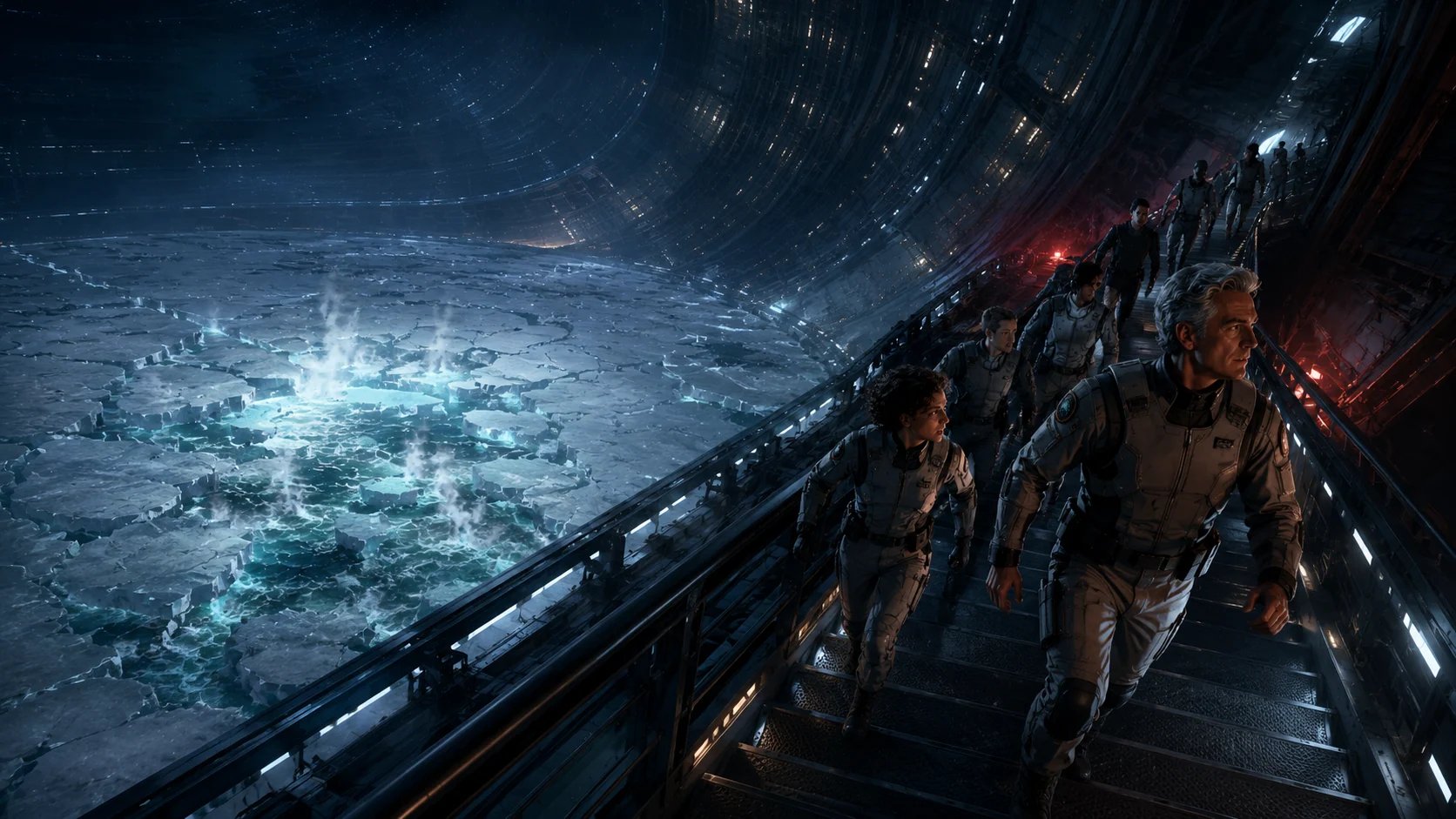
The direct wind disaster has not arrived yet, but Rama is clearly changing. Norton decides it is time to leave the interior.
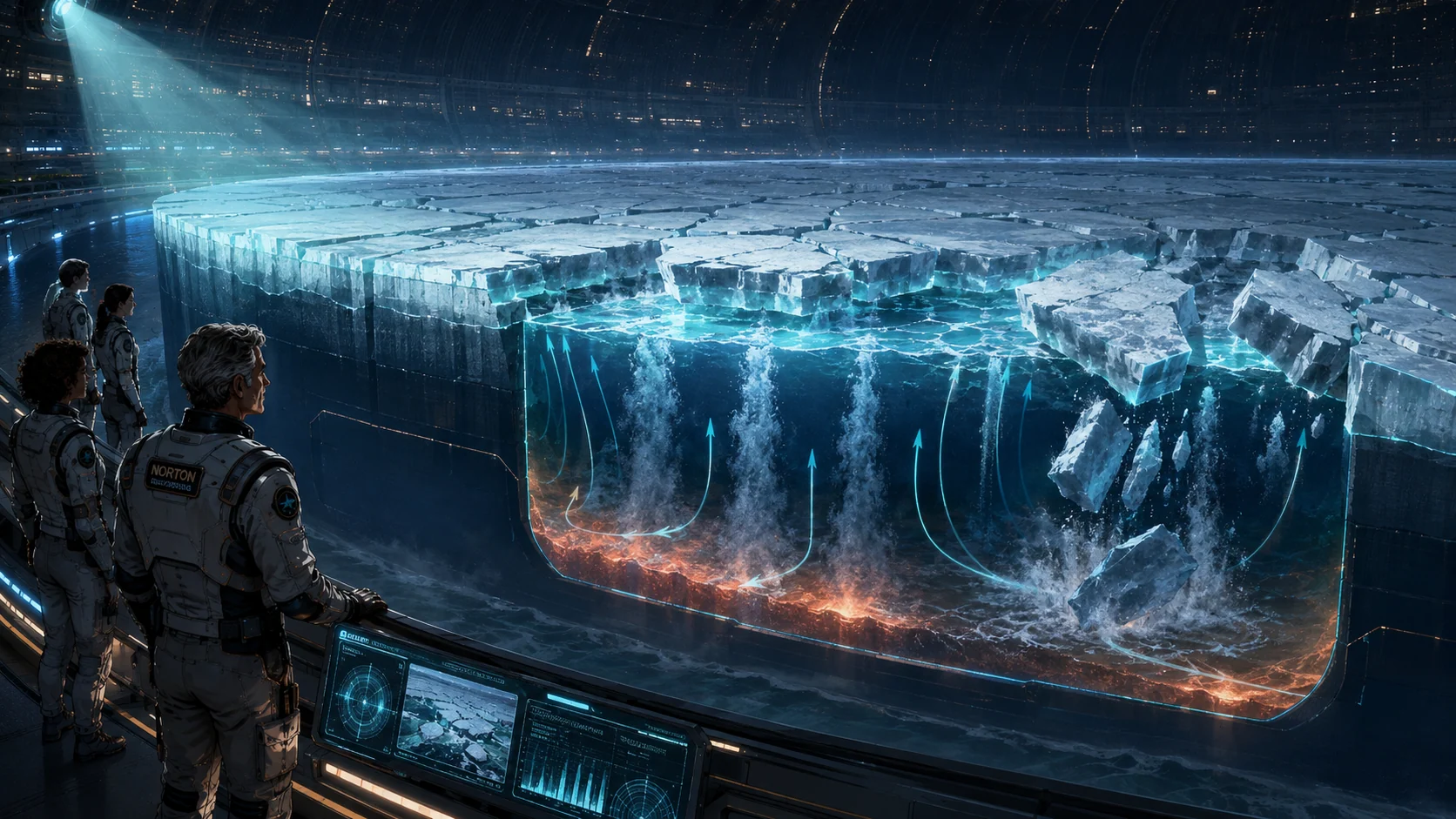
Build the spring model
Use this causal chain to explain the event without calling it random.
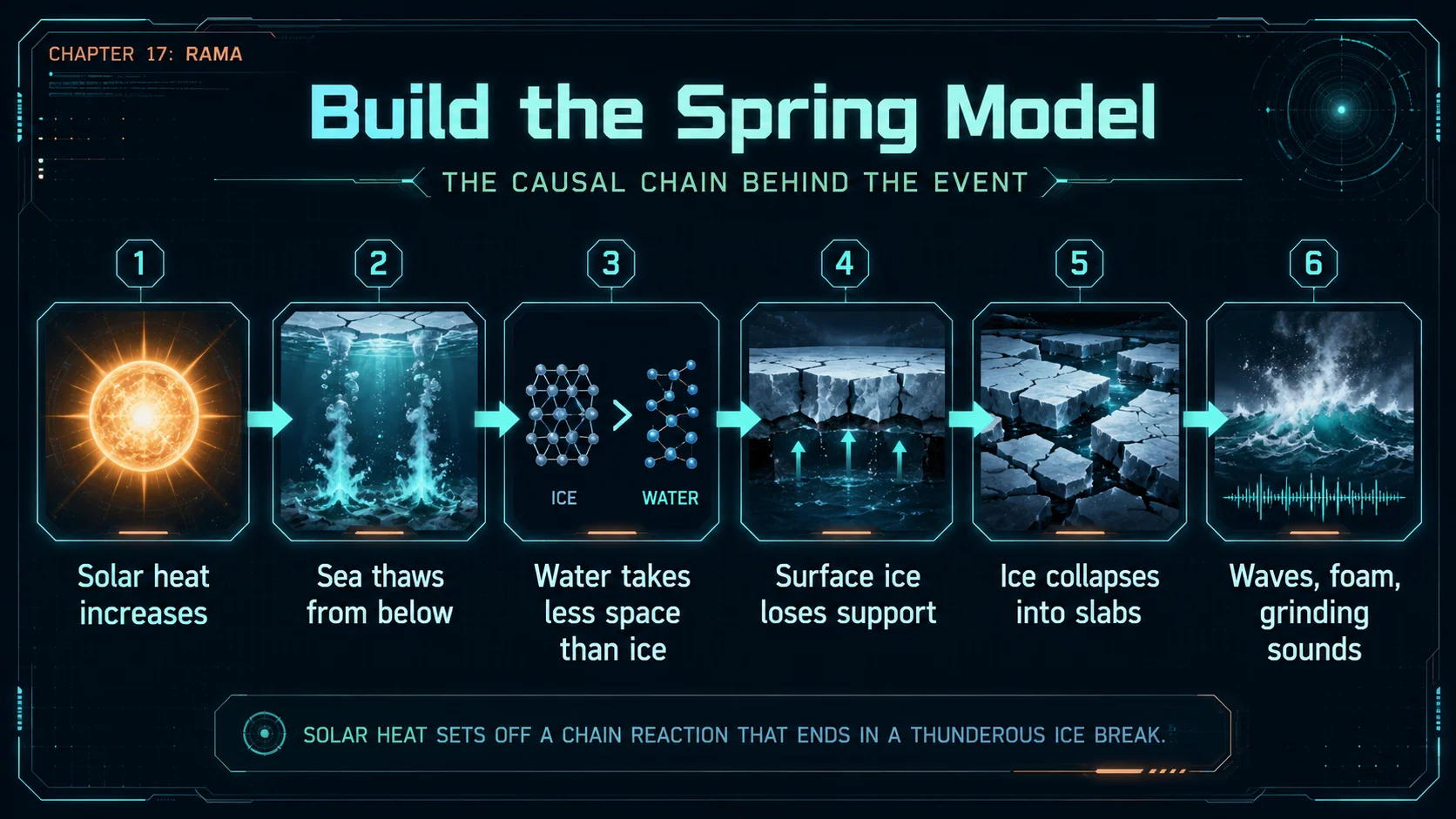
Retell the spring model
Use the causal chain below to explain the event clearly and logically.
Sentence frame
Because the sea thawed from below, the surface ice lost support, so it collapsed into slabs and created waves and grinding sounds.
Observation, inference, prediction, or decision?
Part 1: choose the best label for the first two statements.
Labels
Observation = directly noticed Inference = explained from evidence Prediction = expected future event Decision = chosen action
Observation, inference, prediction, or decision?
Part 2: choose the best label for the next two statements.
Reflection
Which label was hardest to choose? Why?
Put the chapter events in order
Click each event in the order it happens.
Key vocabulary: thaw, collapse, turbulence
thaw
to melt after being frozen
Sentence: The sea began to thaw from underneath.
collapse
to fall down suddenly because support is gone
Sentence: The ice collapsed into floating slabs.
turbulence
violent or irregular movement of air or water
Sentence: The forecast warned of possible turbulence.
Key vocabulary: unsupported, subside, evacuate
unsupported
not held up from below
Sentence: The upper ice became unsupported.
subside
to become quieter, weaker, or lower
Sentence: The crashing slowly subsided.
evacuate
to leave a dangerous place
Sentence: Norton decided the team should evacuate.
Pronunciation focus
Practice the difficult clusters and rhythm. Read slowly first, then with mission urgency.
/ΞΈ/
thaw, beneath, three, thousand
Final clusters
collapsed, cracked, asked, risked
Long words
unsupported, turbulence, communication
Contrast
ice / eyes, sea / see, wind / went
Read-aloud mission line
The sea had thawed beneath the ice, so the unsupported surface cracked, collapsed, and sent waves racing across Rama.
Cause and result connectors
Practice scientific explanations with clear logic.
Because
Because the lower ice melted, the top layer lost support.
So
The water occupied less space, so the upper ice collapsed.
Therefore
The environment was changing; therefore, Norton chose to leave.
Student build
Did Norton make the right call?
Choose one position, then defend it with evidence.
Evidence frame
From Rama to real life
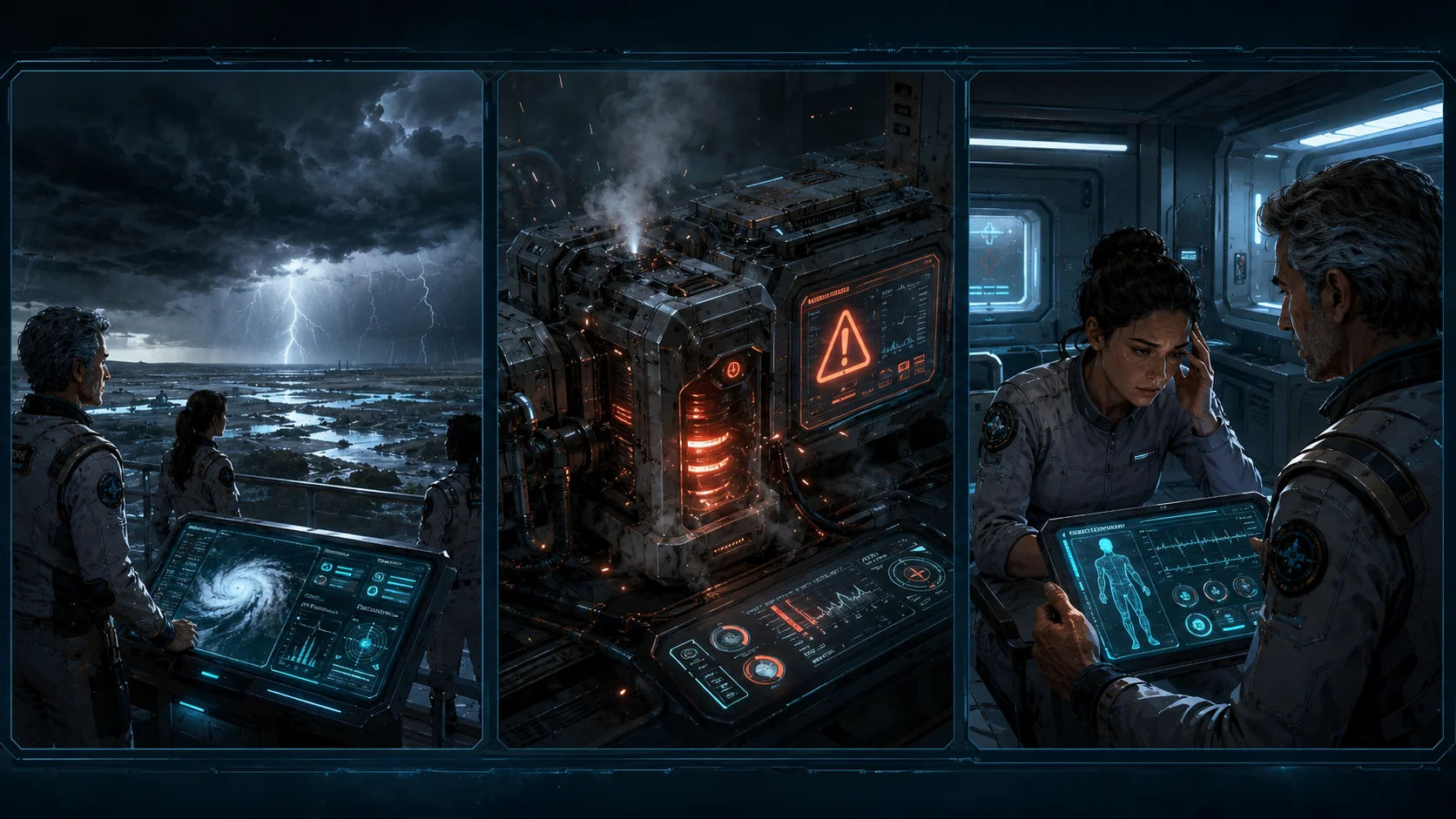
Connected warning signs can help people decide when to act before a problem becomes a disaster.
Weather
A storm forecast is uncertain, but dark clouds and rising wind increase confidence.
Technology
A device may still work, but heat, noise, and error messages suggest failure is approaching.
Health/Safety
Small symptoms or hazards may be signals in a larger system.
Mission check: Questions 1β3
Mission check: Questions 4β5
Write the Chapter 17 safety recommendation
Use this structure for the final response.
Rubric
- 3 points: accurate chapter evidence
- 3 points: clear cause-effect explanation
- 2 points: acknowledges uncertainty
- 2 points: clear, safe recommendation