1. Instructional challenge
Advanced English learners need opportunities to interpret vocabulary, read for meaning, speak clearly, and connect language with decisions in context. The WL Classes lessons use narrative missions to place these tasks within a coherent reading experience rather than as disconnected drills.
2. Learners and constraints
The instructional context includes learners working through contextual texts and spoken language tasks with teacher guidance available. The samples emphasize vocabulary scaffolds, pronunciation practice, guided comprehension, and learner interaction.
3. My design decisions
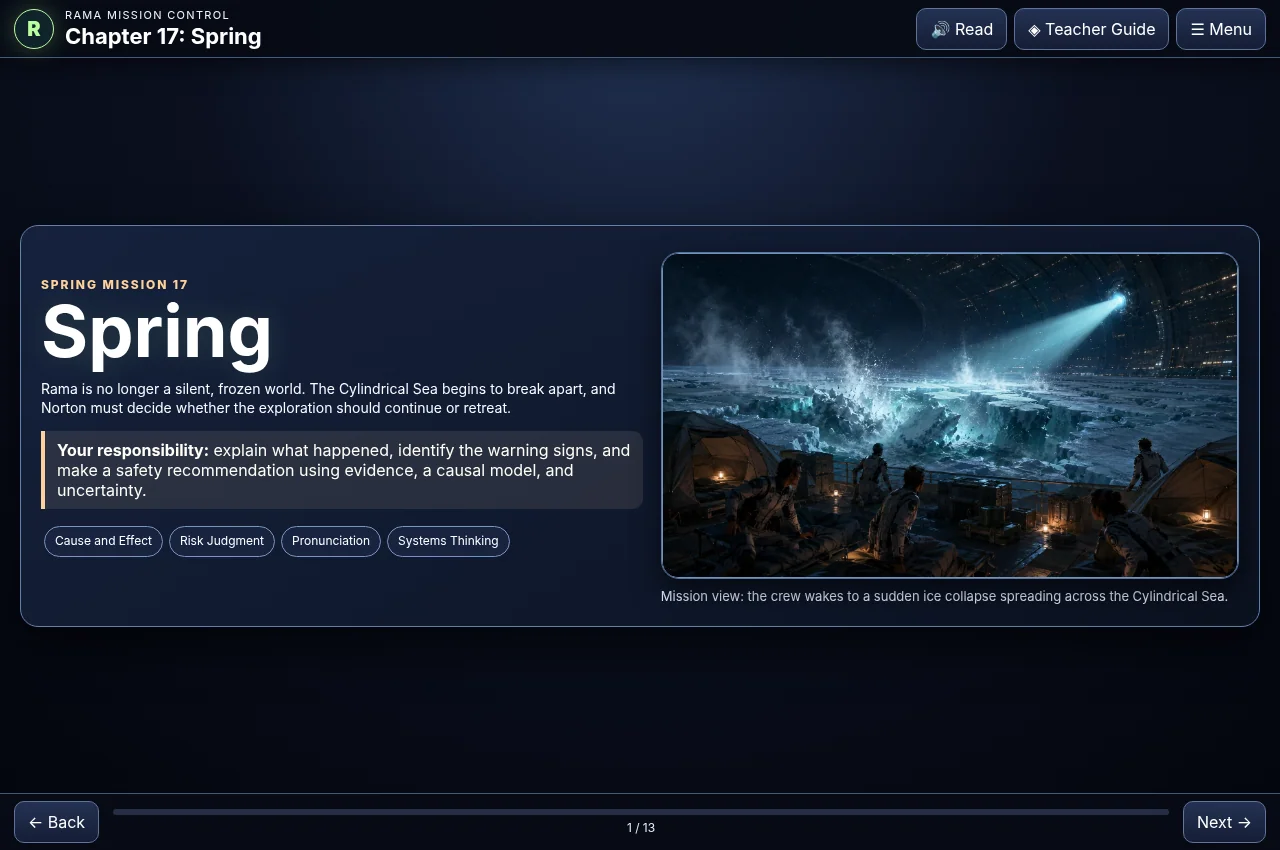
The lesson combines scenario information with reading, language prompts, and questions that ask learners to interpret evidence and apply ideas in context.
Student activities include vocabulary and pronunciation support; instructor guides provide additional teaching prompts and context.
Preliminary learner comments identify opportunities to improve language support and instructions. They inform revisions but cannot establish general effectiveness.

4. Evidence and limits
Original student lessons and teacher materials are included. Two small learner-feedback responses across distinct projects, each with n = 1, cannot be generalized or treated as measured learning gains. The instructional samples also require a separate review of third-party source-text and imagery permissions before unrestricted redistribution.
Next design decision
Test comprehension and audio clarity with a broader learner sample, document performance outcomes, improve bilingual scaffolds where needed, and verify publication rights for every third-party source asset.